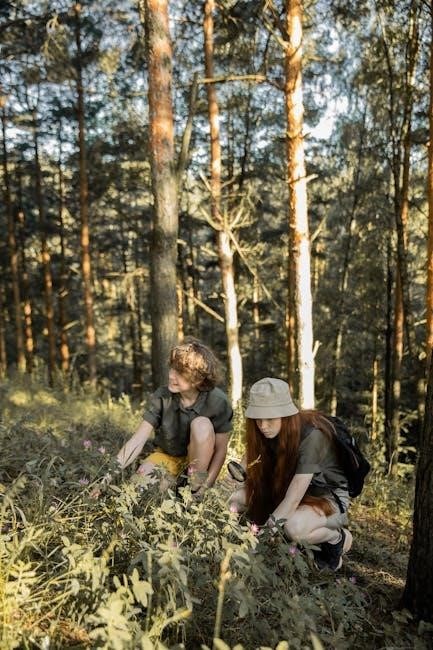
Nature Scavenger Hunt PDF: A Comprehensive Plan
Nature scavenger hunts, often utilizing PDF formats, provide engaging family entertainment, especially during camping or when seeking novel children’s activities.
These hunts blend outdoor exploration with playful challenges, offering a structured way to appreciate the natural world and foster family bonding.
Nature scavenger hunts are a delightful way to connect with the outdoors, encouraging exploration and observation of the natural world. They transform a simple walk into an exciting adventure, appealing to all ages and fostering a sense of discovery. These hunts can range from simple item-collection lists to more complex, clue-based challenges, making them adaptable for various environments and skill levels.
The core concept involves participants searching for specific items or completing tasks within a natural setting – a park, forest, garden, or even a backyard. They’re particularly beneficial for children, promoting curiosity, learning, and physical activity. As highlighted, they’re excellent for keeping kids entertained during camping trips or providing a fresh activity for rainy days. The increasing availability of PDF versions streamlines preparation, offering pre-made lists and templates for easy implementation, ensuring a fun and educational experience for everyone involved.
Why Use a PDF Format?
PDFs offer a convenient and reliable format for nature scavenger hunts, providing several key advantages. Firstly, they ensure consistent formatting across different devices – computers, tablets, and smartphones – eliminating potential display issues. This is crucial for clear instructions and visual aids. Secondly, PDFs are easily printable, allowing participants to have a physical copy for use in areas with limited connectivity.
Furthermore, PDFs are readily shareable via email or messaging apps, simplifying distribution to family and friends. They also support embedded images and illustrations, enhancing the hunt’s visual appeal and clarity. The format’s stability prevents accidental edits, preserving the integrity of the scavenger hunt list. Many websites now offer customizable PDF templates, making it simple to create personalized hunts tailored to specific locations or themes, streamlining the planning process significantly.
Benefits of Nature Scavenger Hunts for Children
Nature scavenger hunts offer a wealth of developmental benefits for children. They encourage exploration and observation skills, prompting kids to actively engage with their surroundings. These hunts foster a deeper appreciation for the natural world, promoting environmental awareness from a young age. The activity boosts cognitive skills like problem-solving and critical thinking as children decipher clues and identify items.
Furthermore, scavenger hunts enhance physical activity, getting children moving and exploring outdoors. They also promote teamwork and cooperation if conducted in groups. The sense of accomplishment from finding items builds confidence and self-esteem. These hunts provide a fun and engaging alternative to screen time, encouraging a healthy lifestyle and creating lasting family memories, making learning an adventure.
Benefits of Nature Scavenger Hunts for Families
Nature scavenger hunts provide a fantastic opportunity for quality family time, disconnecting from digital distractions and reconnecting with each other and the outdoors. They encourage collaboration and communication as family members work together to solve clues and find items. These hunts create shared experiences and lasting memories, strengthening family bonds. They offer a relatively inexpensive and accessible activity, requiring minimal preparation and resources.
Scavenger hunts can be adapted to suit all ages and abilities, ensuring everyone can participate and contribute. They promote a sense of adventure and discovery, fostering a shared appreciation for nature. In a world where vacations and activities are sometimes limited, a scavenger hunt offers a fun, free, and engaging way to spend time together, building stronger relationships.
Creating Your Nature Scavenger Hunt PDF
Designing a nature scavenger hunt PDF involves selecting a theme, crafting age-appropriate challenges, and deciding between item or task-based hunts for optimal engagement.
Theme Ideas for Your Scavenger Hunt
Brainstorming themes elevates a simple scavenger hunt into an immersive adventure. Consider a “Colors of Nature” theme, tasking participants with finding items matching specific hues – a red leaf, a brown twig, a green stone. Alternatively, a “Texture Hunt” encourages exploration through touch, seeking rough bark, smooth pebbles, or soft moss.
For younger children, a “Wildlife Detective” theme focusing on animal signs – feathers, footprints, or nests – can be captivating. More advanced hunts could center around plant identification, requiring participants to locate specific tree species or wildflowers. Seasonal themes, like an “Autumn Bounty” or “Spring Awakening” hunt, tie into the current environment.
Don’t hesitate to incorporate fictional elements! A “Fairy Forest” or “Pirate’s Treasure” theme adds a layer of imaginative play. Remember to tailor the theme’s complexity to the age and abilities of the hunters, ensuring a fun and achievable experience for everyone involved.
Age-Appropriate Challenges
Tailoring challenges to age is crucial for a successful nature scavenger hunt. For preschoolers, focus on simple item-based hunts: “Find a leaf,” “Find a rock,” “Find something yellow.” Keep the list short and visually supported with pictures in the PDF. Early elementary children can handle slightly more complex tasks, like “Find three different types of leaves” or “Find something smooth and something rough.”
Older elementary students thrive on task-based challenges: “Build a miniature shelter for a fairy,” “Identify two types of trees,” or “Find evidence of an animal.” Teenagers and adults can tackle more intricate puzzles, like nature photography challenges or identifying specific plant species using a field guide.
Always prioritize safety and ensure challenges are achievable within the designated area and timeframe. Varying difficulty within a hunt allows for participation from multiple age groups.
Item-Based vs. Task-Based Hunts

Nature scavenger hunts, presented conveniently in PDF format, can be structured in two primary ways: item-based or task-based. Item-based hunts involve finding specific objects – “a feather,” “a pinecone,” “a smooth stone.” These are excellent for younger children, fostering observation skills and simple identification. The PDF checklist becomes a visual record of their discoveries.
Task-based hunts, however, require participants to do something, like “build a small tower of rocks,” “find something that smells sweet,” or “mimic an animal sound.” These encourage creativity, problem-solving, and deeper engagement with the environment. A well-designed PDF can include space for sketching or writing observations related to the tasks.
Combining both approaches within a single hunt offers a balanced and enriching experience for all ages.
Difficulty Levels: Easy, Medium, Hard
When crafting a nature scavenger hunt PDF, tailoring the difficulty to participants’ ages and experience is crucial. Easy hunts feature common, readily visible items – “a green leaf,” “a dandelion,” – perfect for preschoolers and early elementary students. The PDF should include clear pictures alongside text.
Medium difficulty introduces slightly more challenging finds – “a feather from a bluebird,” “a rock with stripes,” – requiring closer observation and perhaps some basic knowledge. Hard hunts involve abstract concepts or rarer items – “evidence of an animal’s home,” “a plant with thorns,” – suitable for older children and adults.
A progressive PDF design, with tiered lists, allows families to choose a level or advance as they succeed, maximizing engagement and enjoyment.
Essential Elements of a Nature Scavenger Hunt PDF
Effective nature scavenger hunt PDFs require clear instructions, item lists, checkbox space for tracking progress, and engaging visual aids like images and illustrations.
Clear Instructions and Rules
A successful nature scavenger hunt PDF hinges on easily understood guidelines. Instructions should explicitly state the hunt’s objective – is it item collection, photo documentation, or task completion? Define the boundaries of the search area clearly, ensuring participants understand where they can and cannot venture.
Rules are crucial for fair play and safety. Specify if items must be left in place after identification, promoting environmental respect. Detail any time limits or scoring systems; Address team dynamics if applicable, outlining collaboration expectations.
Consider including a section on what to do if an item isn’t found, offering alternatives or bonus challenges. PDF format allows for concise, printable rules, readily accessible during the hunt. Ambiguity leads to confusion; clarity ensures a fun, focused experience for all ages.
List of Items/Tasks to Find
The heart of any nature scavenger hunt PDF is a well-crafted list. Items should be specific yet attainable within the chosen environment. Examples include “a feather,” “a smooth grey stone,” or “a leaf with three lobes.” For task-based hunts, consider “find something rough” or “locate evidence of an animal.”
Categorize items by difficulty to cater to varied age groups. Include a mix of common and slightly challenging finds to maintain engagement. PDF format allows for visually appealing lists, potentially incorporating small images alongside each item.
Consider thematic lists – birds, trees, insects – to add an educational element. Ensure the list aligns with the hunt’s location and season. A thoughtfully curated list transforms a simple walk into an exciting adventure.
Space for Checkboxes or Notes
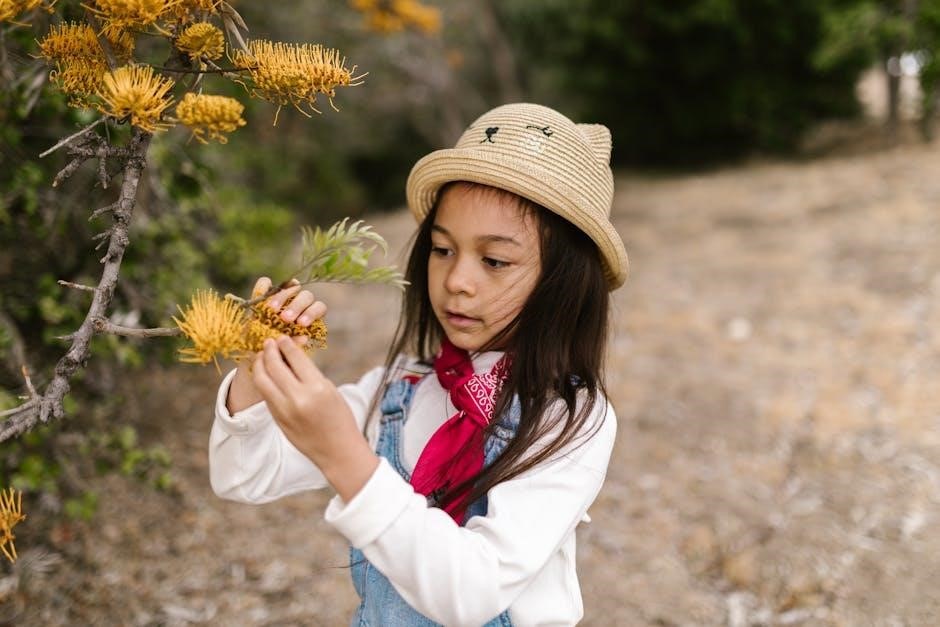
A crucial element of a functional nature scavenger hunt PDF is dedicated space for participants to record their progress. Simple checkboxes next to each item on the list provide a clear visual indication of completion. Alternatively, include blank lines for notes – allowing for observations about the found items, sketches, or even a brief description of the location.
This interactive feature enhances engagement and encourages closer observation of nature. PDF’s allow for fillable forms, enabling digital completion and easy sharing.
For younger children, larger checkboxes are preferable. Providing ample space fosters creativity and transforms the hunt into a personalized nature journal.
Visual Aids: Images and Illustrations
Enhancing a nature scavenger hunt PDF with visual aids significantly boosts its appeal and clarity, especially for younger participants. Including images or illustrations alongside the list of items to find provides crucial support for identification; A picture of a specific leaf, flower, or insect removes ambiguity and encourages accurate observation.
PDF format readily supports image integration, allowing for vibrant and detailed visuals. Consider using real photographs of local flora and fauna to increase relevance. Illustrations can be particularly helpful for abstract concepts or items that are difficult to photograph effectively.
Visual cues transform the hunt into a more engaging and accessible experience, fostering a deeper connection with nature.
Resources for Finding & Creating PDFs
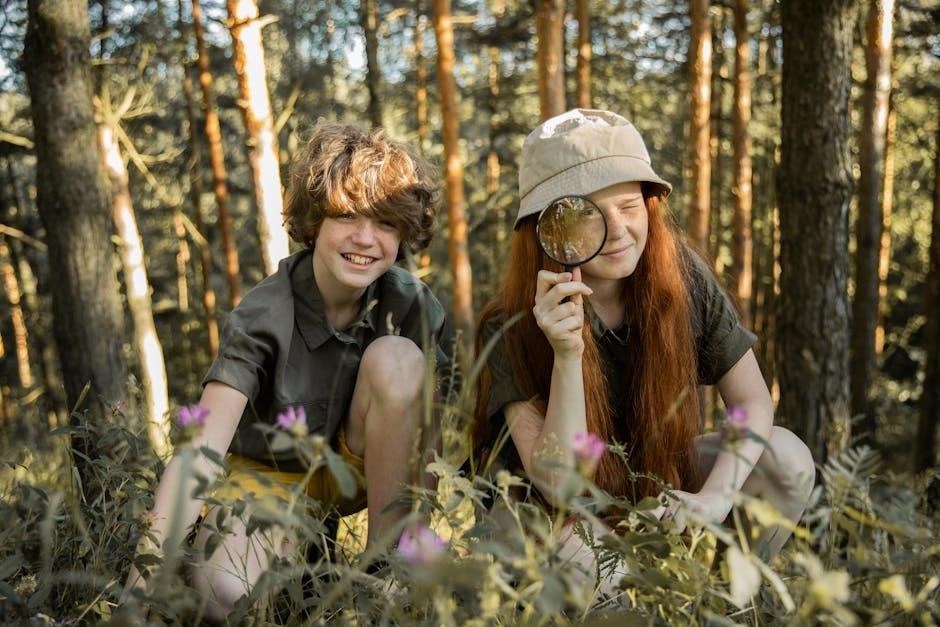
Numerous online resources offer free printable nature scavenger hunt PDFs, alongside customizable templates and software for crafting personalized hunts.
Free Printable Nature Scavenger Hunt PDFs
A wealth of free, printable nature scavenger hunt PDFs are readily available online, offering a convenient starting point for your outdoor adventure. These pre-designed hunts often cater to various age groups and themes, simplifying the planning process. Websites dedicated to parenting, education, and outdoor activities frequently host these resources.
Many options feature beautifully designed checklists with images, making them visually appealing for children. You can find hunts focused on specific environments – forests, parks, beaches – or broader themes like colors, shapes, or textures. A quick internet search using keywords like “free nature scavenger hunt PDF” will yield numerous results. Remember to preview the PDF before printing to ensure it aligns with your desired difficulty level and the natural surroundings available to you. Utilizing these free resources allows you to quickly implement a fun and educational activity without significant preparation time.
Websites Offering Customizable Templates
For those seeking a more personalized experience, several websites provide customizable nature scavenger hunt templates. These platforms allow you to tailor the hunt to your specific location, the age of participants, and desired learning objectives. Canva, for example, offers a range of visually appealing templates that can be easily modified with your own text, images, and branding.
Other options include dedicated educational resource sites and online design tools. Customization options typically include adjusting the list of items or tasks, adding clues, and altering the overall design. This level of control ensures the scavenger hunt is perfectly suited to your needs and environment; Many of these websites offer both free and premium templates, with premium options often providing more advanced features and design elements. Creating a custom PDF allows for a truly unique and engaging experience.
Software for Creating Your Own PDF
If you prefer complete creative control, several software options empower you to design and compile your own nature scavenger hunt PDF from scratch. Microsoft Word and Google Docs are readily accessible choices, allowing for text formatting, image insertion, and basic layout design. Once completed, these documents can be easily exported as PDFs.
For more advanced design capabilities, consider using desktop publishing software like Adobe InDesign or Affinity Publisher. These programs offer precise control over layout, typography, and graphics, resulting in a professional-looking PDF. Alternatively, online PDF editors provide user-friendly interfaces for creating and modifying PDF documents directly within your web browser. Regardless of the software chosen, remember to prioritize clarity, visual appeal, and ease of use when designing your scavenger hunt.
Enhancements & Variations
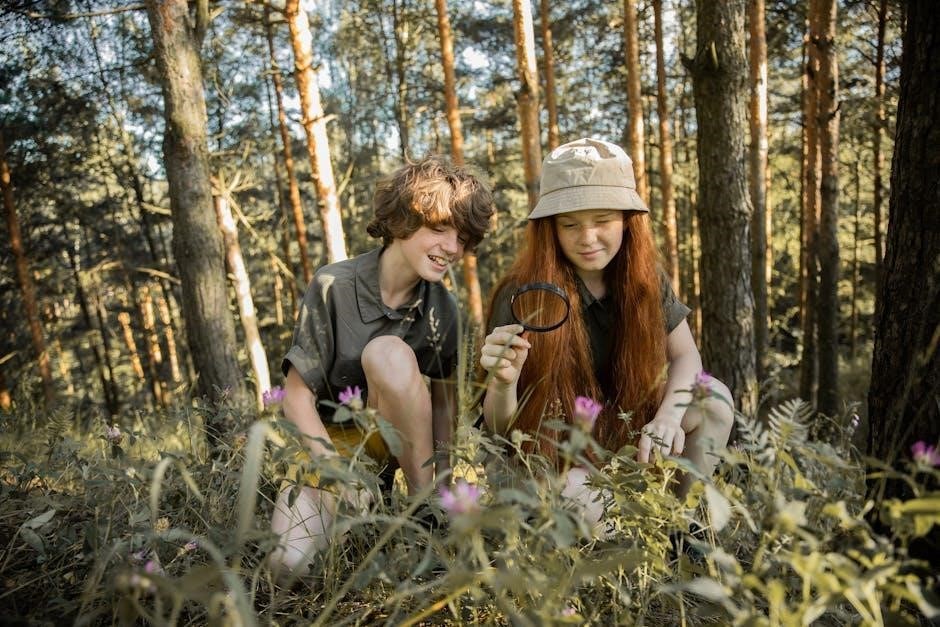
Elevate your hunt with photo challenges, rhyming clues, team play, or educational integrations – transforming a simple PDF into an unforgettable adventure!
Photo Scavenger Hunt Version
Transform your nature scavenger hunt PDF into a visually engaging experience by incorporating a photo component! Instead of collecting physical items, participants are tasked with capturing photographic evidence of specific natural elements or completing designated actions.
For example, a task might be to “photograph a leaf larger than your hand” or “take a picture of someone hugging a tree.” This variation is particularly appealing for older children and families, encouraging creativity and observation skills.
The PDF can include spaces to attach digital photos or simply list the photo challenges. This version minimizes environmental impact, as nothing is disturbed or removed from its natural habitat. It also creates a lasting memento of the scavenger hunt adventure – a collection of photos documenting the fun and discoveries made along the way!
Consider adding a judging element for extra excitement, awarding points for creativity, composition, or adherence to the challenge.
Rhyming Clue Scavenger Hunt
Elevate the excitement of your nature scavenger hunt PDF with a series of rhyming clues! This adds a layer of playful challenge, encouraging problem-solving skills and enhancing engagement for participants of all ages. Instead of directly listing items to find, the PDF presents clues in rhyme, leading hunters to the next location or object.
For instance, a clue might read: “I stand tall and reach for the sky, birds build their nests as seasons fly.” (Answer: a tree). This format transforms the hunt into a mini-adventure, requiring deciphering and teamwork.
The PDF should clearly indicate whether clues lead to physical items or locations. Vary the difficulty of the rhymes to cater to different age groups. This variation fosters literacy skills and adds a whimsical touch to the outdoor experience, making it memorable and fun!
Ensure clues are unambiguous to avoid frustration.
Team-Based Scavenger Hunt Ideas
Transform your nature scavenger hunt PDF into a collaborative adventure by incorporating team-based challenges! Divide participants into smaller groups, fostering teamwork, communication, and friendly competition. The PDF can include tasks requiring collective effort, such as identifying a specific number of plant species or building a miniature shelter using natural materials.
Assign each team a unique color or symbol for marking their findings on the PDF checklist; Introduce bonus points for creative solutions or completing tasks within a time limit. Consider incorporating challenges that require teams to share knowledge or skills.
This approach encourages cooperation and allows participants to learn from each other. The PDF can also include a section for teams to document their experience with photos or short descriptions, creating lasting memories.
Ensure fair play and clear scoring rules.
Incorporating Educational Elements
Elevate your nature scavenger hunt PDF beyond simple fun by seamlessly integrating educational components! Transform the hunt into a learning experience by including questions about local flora and fauna, requiring participants to identify trees, birds, or insects. The PDF can feature prompts asking about animal habitats, plant life cycles, or ecological relationships.
Include a section for sketching discovered specimens or writing short descriptions of their observations. Incorporate challenges that require research, such as identifying a specific rock type or learning about the history of the area.
The PDF can also include a glossary of terms related to nature and ecology. This approach fosters curiosity, promotes scientific thinking, and deepens appreciation for the natural world, making the scavenger hunt both entertaining and enriching.
Consider age-appropriate complexity.
Safety Considerations
Prioritize safety within your nature scavenger hunt PDF; adult supervision is crucial, alongside awareness of local wildlife and respecting the environment.
Supervision Requirements
Adult supervision is paramount when implementing a nature scavenger hunt PDF, particularly with younger children. The level of supervision should correlate directly with the age and maturity of the participants, as well as the complexity of the terrain.
For preschool-aged children, constant, direct supervision is essential. Elementary-aged children may benefit from a “buddy system” alongside periodic check-ins from an adult. Teenagers, while generally more independent, should still be informed of boundaries and expected check-in times.
Supervisors should be equipped to handle minor injuries, identify potential hazards (like poisonous plants or insects), and ensure participants adhere to the established rules of the hunt and respect the natural environment. A pre-hunt briefing covering safety guidelines is highly recommended, reinforcing responsible exploration and awareness.
Awareness of Local Wildlife
A successful and safe nature scavenger hunt PDF necessitates a thorough understanding of the local wildlife. Participants should be educated about potential encounters with animals, insects, and plants that could pose a risk.
Before embarking on the hunt, research the area to identify any venomous snakes, poisonous plants (like poison ivy or oak), or potentially aggressive animals. Discuss appropriate responses to wildlife sightings – emphasizing observation from a distance and avoiding any attempts to feed or approach animals.
Instruct participants to report any wildlife encounters to a supervising adult immediately. Carrying a basic first-aid kit equipped to handle insect stings or minor animal scratches is also advisable, alongside knowledge of local emergency contact information.
Respecting the Environment
A core principle of any nature scavenger hunt PDF should be a commitment to environmental responsibility. Participants must understand the importance of leaving no trace and minimizing their impact on the natural surroundings.
Clearly state in the hunt’s instructions that collecting items should be limited to pre-approved, non-living materials like leaves or pebbles, and only if it’s permissible in that specific location. Emphasize the importance of not disturbing plants, flowers, or animal habitats.
Encourage participants to pack out all trash, including food wrappers and any materials used during the hunt. Reinforce the idea that the goal is to observe and appreciate nature, not to alter or damage it, fostering a sense of stewardship for the environment.
Be First to Comment